Author: .

global waste management

What makes the world’s most effective waste strategies work, and why are so many countries still getting it wrong? Darrel Moore speaks to leading international experts to find out.

From South Korea’s food waste revolution to Sweden’s integrated energy-from-waste systems, some countries consistently outperform others in managing resources.

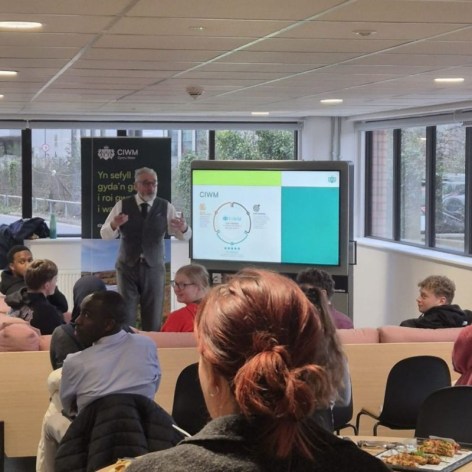
Ahead of this year’s ISWA World Congress, held in London, Circular Online explores what underpins these high-performing systems.

A growing global divide

Global waste generation is rising faster than previously understood. According to the World Bank’s What a Waste 3.0, the world produced 2.56 billion tonnes of municipal solid waste in 2022, with projections reaching 3.86 billion tonnes by 2050 under current trajectories – a near 50% increase.

global waste
The world produced 2.56 billion tonnes of municipal solid waste in 2022.

This growth is not evenly distributed. High-income countries, while representing just 16% of the global population, generate 29% of waste.

Meanwhile, low- and middle-income regions are experiencing the fastest growth. Sub-Saharan Africa is projected to see waste volumes more than double by the mid-century, while South Asia’s waste output is expected to almost double if current trends continue.

At the same time, the ability to manage this waste diverges sharply. High-income countries achieve near-universal collection, while low-income countries collect only around 28% of waste.

Globally, around 30% of waste remains uncollected or is openly dumped, with significant consequences for public health, climate and economic development.

This widening gap defines the global waste challenge. While some countries have built systems that deliver consistently strong outcomes, others still struggle with basic service provision. The difference is not simply one of wealth, but of system design.

Defining what ‘effective’ means

High-performing waste systems are often judged by headline recycling rates or landfill diversion figures. But this misses the point; true effectiveness is systemic. It reflects a combination of outcomes:

  • Reliable collection coverage
  • Stable financing
  • Low contamination rates
  • Strong end-markets for materials
  • Long-term policy durability

As the World Bank emphasises, waste management sits at the intersection of public health, environmental protection and economic development.

Where systems function well, cities are cleaner, more resilient and more economically competitive. Where they fail, the consequences ripple across economies and communities.

Dan Cooke, Director of Policy, Communications and External Affairs at CIWM, cautions against oversimplifying success: “The question is unfortunately too simple for the hugely varying systems and complexities of global resources and waste management.”

Instead, he points to a set of shared characteristics: “There are undoubtedly some commonalities… clear strategies, objectives and targets, economic and regulatory frameworks… effective planning and enforcement regimes… alongside responsible business and entrepreneurial endeavour.”

This is the foundation of high performance. Not a single policy or technology, but alignment across the system.

South Korea: Behaviour driven by incentives

South Korea

South Korea offers one of the clearest examples of behaviour-led system design.

Its food waste system combines separate collection with pay-as-you-throw principles, where households are charged based on the amount of food waste they dispose of.

In many areas, RFID-enabled bins or prepaid bags are used to track waste generation, making it both visible and financially tangible.

The results are widely cited as among the best in the world. South Korea is commonly reported to recycle around 90% or more of its food waste, redirecting material into compost, animal feed and bioenergy.

What makes this system effective is not just technology, but clarity of incentives. Households directly experience the cost of waste, and the infrastructure makes compliance straightforward.

This reflects a broader principle: behaviour change does not happen through awareness alone. It requires systems where the easiest option is also the right one.

Sweden: Integration over isolation

Sweden

Sweden is often cited for its minimal reliance on landfill, particularly for household waste, but its success lies in how the system is structured.

Energy-from-waste is fully integrated with district heating networks, supplying heat and electricity to homes and businesses. Recycling, biological treatment and energy recovery are not competing approaches; they are coordinated components of a single system.

This integration allows Sweden to treat waste as a resource rather than a liability. It also provides a consistent demand for residual waste as a fuel source. To support this system, Sweden imports sorted waste from other European countries to supply its energy recovery capacity.

Crucially, this system is underpinned by long-term policy stability and sustained infrastructure investment. Investors and operators work within a predictable framework, enabling consistent performance over decades.

The lesson is not to replicate energy-from-waste in isolation, but to recognise that effective systems are designed as ecosystems, not as disconnected interventions.

Germany: Responsibility starts upstream

German

Germany’s system is built on one of the world’s most developed frameworks of Extended Producer Responsibility (EPR).

Producers are required to finance the collection and recycling of packaging materials, shifting the cost burden upstream. This creates a direct incentive to reduce material use and improve recyclability.

The system is reinforced by strict regulation, advanced sorting infrastructure and strong compliance mechanisms. The result is high-quality recycling streams and a mature secondary materials market.

However, as Jane Gilbert of Carbon Clarity highlights, replicating this model is far from straightforward: “Many countries attempt to replicate elements… but these efforts frequently underperform because they transplant policy instruments without the enabling conditions that make them effective.”

One of the most significant gaps is the role of the informal sector, she adds: “In many low- and middle-income countries, informal waste pickers play a central role… When informal systems are ignored or displaced rather than integrated, material recovery efficiency can decline.”

This is a critical insight. High-performing systems are not just formal. Ignoring existing systems can weaken performance rather than improve it.

Japan: Precision through culture and trust

Japan’s waste system demonstrates the importance of behavioural alignment.

Households separate waste into multiple categories, often with strict collection schedules and detailed local guidance. This level of precision would be difficult to enforce through regulation alone.

Instead, it is supported by strong social norms and public trust. Residents believe their efforts matter, and the system consistently delivers visible results.

The outcome is a system with high levels of compliance, low landfill dependence and highly controlled waste flows. However, Japan’s system still relies heavily on incineration, and its municipal recycling rate remains relatively modest compared to some European countries.

This highlights a key point: behaviour is not simply a variable to be managed, it is a core component of system design.

Why does replication so often fail

If the principles of high-performing systems are broadly understood, why do so many attempts to replicate them fall short?

Cooke explains: “Simply trying to transpose them into other countries with different economic, political, regulatory and cultural frameworks almost always fails.”

Even within a single country, variation can be significant, he says. “This is often exaggerated in regional differences. Just consider variations within the UK alone.”

The World Bank reinforces this point. Waste systems are shaped by income levels, governance capacity and infrastructure. While nearly all waste in high-income countries is managed in controlled facilities, only a very small proportion is managed this way in low-income countries.

Gilbert identifies several recurring failure points:

  • Weak enforcement capacity
  • Lack of data and monitoring systems
  • Absence of end-markets for recyclate
  • Misalignment with informal sector dynamics

She notes: “Without credible enforcement, policy signals fail to drive investment in collection, sorting, and reprocessing infrastructure… Ultimately, what is often missing is systemic alignment.”

This is the core issue. Policies are often imported without the governance, infrastructure or market conditions needed to support them.

The economic reality: Waste as a system investment

One of the most consistent findings from What a Waste 3.0 is the economic importance of waste systems.

Global waste management already costs over $250 billion annually, rising to around $426 billion by 2050 under business-as-usual scenarios. Yet the cost of inaction is even higher, including environmental damage, health impacts and lost economic productivity.

Cooke frames this shift in perspective clearly: “We need to swiftly move from the collective mindset of seeing post-consumer waste as a liability… to understanding resource efficiency and effective waste services as an asset.”

This aligns with the World Bank’s broader conclusion: waste systems are not simply environmental services; they are foundational infrastructure for economic development.

What high-performing systems really share

Across different countries and contexts, the strongest systems consistently demonstrate five core characteristics:

  1. Long-term policy stability – Clear direction sustained over decades, not short-term policy cycles.
  2. Aligned incentives – Households, producers and operators are working toward the same outcomes.
  3. Infrastructure matched to ambition – Policy targets are supported by physical capacity.
  4. Integrated system design – Collection, sorting, treatment and markets are treated as connected stages.
  5. Public trust and participation – People engage because the system is reliable and transparent.

Together, these elements create what can be described as systemic alignment.

The next generation of waste systems

Looking ahead, the question is not whether policy, technology or behaviour will define future systems, but how they interact.

Zoë Lenkiewicz of Global Waste Lab is clear: “The next generation of high-performing waste systems will be defined by how well policy, technology and behaviour are aligned. None of them achieves much in isolation.”

She warns against over-reliance on any single solution: “We have all seen what happens when one of these is treated as the sole answer: policies that sound strong but change little… technologies that promise a great deal but are ill-fitted… and behaviour change campaigns that ask too much of people.”

Instead, success depends on integration, she says. “What will define the strongest systems is whether governance, finance, operations, infrastructure, markets and human behaviour are considered together.”

This is perhaps the clearest articulation of the central lesson: high performance comes from making the whole system work.

The real lesson

There is no single model for success in waste management.

No country has solved every challenge. Even the most advanced systems continue to evolve, responding to changing materials, consumption patterns and environmental pressures.

What distinguishes the highest-performing systems is not individual brilliance, but coherence.

Policy, infrastructure, finance and behaviour are aligned. Incentives reinforce outcomes. Systems are designed to function reliably over time.

As Cooke notes, the challenge remains unresolved: “To my knowledge so far, no country has broken the clear link between economic prosperity and increased waste generation… it remains something of a holy grail across the globe.”

That may be the defining challenge of the next generation.

Join the conversation at ISWA 2026

These questions, and the systems shaping the answers, will take centre stage at the ISWA World Congress 2026, taking place in London from 9–11 November.

Bringing together thousands of professionals, policymakers and industry leaders, the Congress will explore the strategies, technologies and policies driving real-world progress at a pivotal moment for the sector.

Hosted at the QEII Centre in Westminster, the event marks the return of the Congress to the UK for the first time in over 30 years, offering a unique platform to share insight, challenge assumptions and shape the future of resource management.

To learn more, register to attend or submit an abstract here.

The post The world’s most effective waste plans and what makes them work appeared first on Circular Online.

food waste

The UK food and drink manufacturing sector could redistribute one billion meals a year by making ‘small improvements’ across the industry, new research finds.

A new report has found that UK food and drink manufacturers could provide more than one billion meals a year to people facing food insecurity by reducing waste, recovering surplus, and reinvesting cost savings.

The Waste Equation report was developed by the consultancy Newton, in partnership with food redistribution charities The Felix Project and FareShare.

A manufacturing waste map produced as part of the report identifies that most food is lost during preparation, operations, quality control, giveaways, changeovers and planning.

The report found that by targeting these six areas, businesses could ‘dramatically reduce waste’ and improve operational efficiency, as well as redistribute one billion additional meals.

Reacting to the report, Charlotte Hill, CEO at The Felix Project and FareShare, said: “Working collaboratively with food manufacturers to reduce waste, recover surplus and reinvest savings to create more meals not only makes commercial sense, it is the right thing to do.”

“That’s why we’re calling on the UK Government to step up, making it easier and more cost-effective for businesses to donate surplus food, instead of it going to lower-value users. This, however, can’t be done by one sector alone – if everyone begins to play their part, we really can make a step change in 2026.”

According to the research, 3% of the 18.5 million tonnes of UK-manufactured food and drink that UK retailers sell each year, around 550,000 tonnes, is wasted.

The report found that 23% of that waste – 128,000 tonnes – could be prevented, saving manufacturers an ‘estimated £326 million’.

16% of surplus that cannot be cost-effectively prevented – 89,000 tonnes – could be recovered for redistribution by frontline charities, the report says.

Finally, the report found that reinvesting the £326 million in savings at the lowest marginal manufacturing cost could generate a further 657 million meals.

Tim Murray, Partner at Newton, commented: “This report shows that no single organisation can solve the waste problem on its own.”

“By collaborating across the wider supply chain – sharing expertise, logistics, storage, and production capacity – we can unlock far more surplus food for those who need it.”

The post Food manufacturers could redistribute 1bn more meals a year, report finds appeared first on Circular Online.

About Aaron Simon

Full Name: Aaron Simon

Designation: Lawyer | Privacy, Cybersecurity & Compliance

Company: ECIJA

Country: Spain

Aaron’s Learning Journey That Inspires

Which courses or certifications by 101 Blockchains have you completed?

I have successfully completed the Certified Enterprise Blockchain Professional (CEBP)™ certification program by 101 Blockchains. 

What made you choose this certification program, and did you have a productive learning experience with 101 Blockchains?

I selected the Certified Enterprise Blockchain Professional (CEBP)™ certification program to understand how blockchain works at the enterprise level. I also picked the certification to learn how to design and implement blockchain solutions in real business environments with a structured and practical approach. My learning experience with 101 Blockchains helped me gain professional understanding of enterprise blockchain platforms, blockchain architecture concepts and use cases of blockchain technology. The learning outcomes from the certification program will add more value to my career as a lawyer. My comprehensive understanding of the technical aspects of blockchain and how it works will help me provide better guidance to organizations on privacy, governance, and compliance in decentralized systems. 

At 101 Blockchains, you don’t just earn certifications — you gain real-world skills that shape you into a confident blockchain professional.

Which skills or knowledge did you gain from the certification that helped you the most?

I learned about enterprise blockchain architecture and the difference between notable enterprise blockchain platforms from the certification program by 101 Blockchains. The clear and structured explanations provided in the certification course helped me acquire practical understanding of the most important considerations for real-world implementation of blockchain. As a lawyer, I had already learned about the fundamental concepts of blockchain technology. With the certification course, I was able to acquire practical expertise in designing and deploying blockchain solutions for businesses with effective governance systems.

How did the certification program help you with professional growth?

The Certified Enterprise Blockchain Professional (CEBP)™ certification program helped me gain practical understanding of best practices to design and implement enterprise blockchain solutions in real business environments. I have discovered how to evaluate legal considerations for enterprise blockchain solutions with in-depth knowledge of their technical aspects and how they operate. As a result, I believe I can contribute more value to discussions and projects that involve blockchain technology.

From learners to leaders — explore the success stories of 100,000+ professionals with 101 Blockchains.

What is your advice for someone interested in a career in blockchain?

Anyone pursuing a career in blockchain should begin with acquiring in-depth knowledge of the working of blockchain technology. You must also learn about practical examples of blockchain use cases in real-world environments to improve your readiness for a career in blockchain. Professionals who are not working in purely technical roles, such as a lawyer like me, will gain significant benefits from understanding blockchain technology. The intersection between blockchain and many other fields implies that interdisciplinary knowledge and staying updated with technical and regulatory developments in the blockchain space can bring promising benefits for your career.

Advance your Career with Blockchain & Web3 Skills

The post Success Story: Aaron Simon’s Learning Journey with 101 Blockchains appeared first on 101 Blockchains.

Workwear

Protective workwear manufacturer Alsico has announced a ‘major technical breakthrough’ in circular workwear.

Alsico announced that, in collaboration with Stuff4Life and Coats, it has successfully recovered and reused retro-reflective glass beads from end-of-life hi-vis garments.

Stuff4Life’s patented polyester depolymerisation process, with technical validation from Teesside University, has now been shown to separate and preserve the glass beads from hi-vis safety strips during processing.

Alsico says laboratory analysis found that the recovered beads remain intact, spherical, and optically effective, retaining up to 80% of their reflectivity compared to new material.

Reflective strips have traditionally forced garments into incineration due to their tightly bonded composite construction, which Alsico says is one of the biggest barriers to recycling hi-vis clothing.

Through this approach, up to 100% of glass beads can be captured through filtration, and more than 75% of the total reflective strip material can be recovered by weight when reflective strips are manufactured on PET backing fabric.

Performance testing by Coats confirms the recovered beads meet the criteria required for reuse in new reflective tapes and materials.

Commenting on the announcement, Vincent Siau, Head of the Alsico Academy, said: “Recycling reflective strips has long been a critical challenge for hi-vis workwear. Until now, garments containing these materials were typically destined for incineration.”

“These results show that a closed-loop pathway is technically achievable and brings us closer to making circular hi-vis garments a reality.”

How viable is circular workwear?

John Twitchen FCIWM, Founder of Stuff4Life, exclusively told Circular Online: “We chose to focus on workwear and hi-vis PPE because of our roots in the waste, resources, minerals and construction industries, wearing kit that helps keep our colleagues safe, dry, warm and performing.”

“It’s incredibly difficult to recycle polyester-based composite garments that are built to last – much harder than cheap, simple fast fashion.”

“However, the organisations using this kit are motivated by carbon, circularity and other ESG commitments and targets, and also understand the value proposition of buying stuff that’s designed to last longer – the best way to reduce impact and keep on top of costs.”

“We call it ‘wear your commitment’, and our ability to recover and reuse the reflective beads is part of the evolution of better products, better outcomes and better service.”

The post ‘Major technical breakthrough’ in circular workwear announced appeared first on Circular Online.

Packaging EPR

The producer-led organisation UK Packaging PRO has been appointed to manage the UK’s Extended Producer Responsibility for Packaging (pEPR) scheme.

UK Packaging PRO is a producer-led organisation of more than 100 brands, retailers and trade bodies, which are also supported by the Food and Drink Federation (FDF) and the Industry Council for Packaging and the Environment (INCPEN).

Karen Graley, Head of UK Packaging PRO, said UK Packaging PRO was created to give producers a ‘genuine seat at the table’.

“With strong governance in place, a clear mobilisation plan, and broad support from across the sector, we are ready to get to work – in close partnership with PackUK, governments, local authorities and organisations across the value chain to deliver a packaging system that works better for everyone,” Graley continued.

The formal appointment for UK Packaging PRO will commence on 1 April 2026, with PackUK, the scheme administrator for pEPR, maintaining oversight of the PRO.

Core administrative powers, such as final decisions on local authority payments and producer fees, will remain with PackUK.

The pEPR scheme provides funding to local authorities to drive improvements in recycling. £1.4 billion was reinvested back into recycling infrastructure in the first year of the scheme.

Circular Economy Minister, Mary Creagh, called the appointment a ‘major step forward’.

“Our packaging Extended Producer Responsibility (pEPR) scheme will incentivise businesses towards more sustainable packaging choices and improve recycling services in every region,” Creagh said.

“The launch of UK Packaging PRO, led by businesses and working closely with PackUK, is a major step forward – putting industry expertise at the centre of how pEPR is delivered.”

The post UK Packaging PRO appointed to deliver pEPR scheme appeared first on Circular Online.

Paris Blockchain Week, one of the biggest community events in the web3 space, is set to return in 2026. 101 Blockchains is proud to be associated with Paris Blockchain Week 2026 as an ecosystem partner. As an official partner of PBW for the last two years, we have stood at the frontlines of innovation in blockchain and web3. This year, we are preparing to gain more insights on digital assets and TradFi as an ecosystem partner in the biggest convention of decision-makers and industry leaders.

Everyone in the 101 Blockchains community has been looking forward to PBW 2026 with a lot of anticipation. The Paris Blockchain Week 2026 is more than a conference, it aims to drive discussions on the future of digital finance and innovation in web3. Let us share with you some interesting things you can expect from this year’s Paris Blockchain Week event.

Join Paris Blockchain Week 2026 to celebrate the rise of blockchain and web3! As an official partner, 101 Blockchains members can leverage this groundbreaking collaboration to their advantage. Use code 101BLOCKCHAINS-PBW15 to save 15% on your registration.

Interesting Highlights from Paris Blockchain Week 2025

As the official ecosystem partner of Paris Blockchain Week 2026, we are excited to share what you can expect in this year’s event. Before that, we would like to shed some light on the biggest highlights from the Paris Blockchain Week 2025. 

  • The PBW 2025 witnessed more than 10,000 attendees, including corporate leaders, founders, and investors from over 100 countries.
  • The attendees participated in 36,000 high-value networking meetings at PBW 2025.
  • More than 450 journalists from top media outlets, such as Bloomberg and Forbes, had covered the PBW 2025 event.
  • Over 320 C-suite leaders and regulators participated in PBW 2025 as speakers, sharing their insights on institutional adoption of the digital economy.
  • 97.4% of attendees at the PBW 2025 expressed satisfaction with network quality at the event. 

A Glimpse of Paris Blockchain Week 2026

The Paris Blockchain Week is a leading industry event in Europe that draws members of the web3 community and industry leaders every year. The Carrousel du Louvre will host the PBW 2026 event on April 15 and April 16 this year. Over the period of these two days, 10,000 decision-makers will meet to discuss regulatory frameworks, cross-border settlement, market structure, and institutional custody.

The PBW 2026 will serve as a power forum for Europe to shape the future of digital finance worldwide. The experience of Paris Blockchain Week 2026 will include three notable segments with big sponsors from the industry backing the event.

  • Institutional Days

Paris Blockchain Week offers the ideal stage to institutional leaders, capital allocators, and regulators to meet in one place. It provides a shared space to make big decisions for the infrastructure that will transform global markets. The notable points of discussion in Paris Blockchain Week 2026 will be stablecoin payments, Bitcoin treasury strategies and institutional-scale investing, and tokenized assets. You can notice that PBW 2026 creates a platform where leaders will set the standards for defining the future of global finance.

  • Start in Block

The Paris Blockchain Week 2026 is more than just an event where industry leaders and the blockchain and web3 community come together to discuss new trends. It will also host ‘Start in Block’, the biggest startup competition in the domain of web3. The competition will see more than 1000 founders from all over the world competing against each other for over $10,000,000 worth of prizes. PBW 2026 will provide a promising launchpad for emerging startups and visionary leaders who will set new benchmarks.

  • The VIP Dinner

Probably the fanciest part of the Paris Blockchain Week event, the VIP dinner is one of the most talked-about highlights. It is an invitation-only dinner event held within royal halls under splendid and timeless chandeliers. Industry leaders from various domains, including finance, policy, and innovation, exchange ideas and enjoy an exclusive dinner experience.

paris blockchain week

Agenda of the Paris Blockchain Week 2026

The actual schedule of the Paris Blockchain Week 2026 includes more than the two dates specified for the event. An overview of the agenda for PBW 2026 will help you discover how it promises a week filled with productive events revolving around institutional finance, innovation, and digital assets. What do we know of the Paris Blockchain Week 2026 Agenda?

1. The First Two Days 

Paris Blockchain Week 2026 will start with ‘Hack the Block’, a two-day marathon for developers. It will be held across two days, 11th and 12th April 2026, and calls developers all over the world to build the next wave of infrastructure for digital assets.

2. The VIP Dinner

Are you a global leader in blockchain, web3, and digital finance? The Paris Blockchain Week 2026 welcomes you to participate in the VIP Dinner on 14th April 2026. The invitation-only dinner event will be hosted in the halls of the Château de Versailles. The special dinner will see many global leaders coming together under one roof. 

3. Day 1 of the Paris Blockchain Week 

The first day of the Paris Blockchain Week, 15th April 2026, will have two notable events. Experts will talk about the evolution of digital payments, financial infrastructure, and stablecoins in the “Stablecoin & Payment Infrastructure Reception & Fireside Chat”. The second event of the day will be the “VIP Regulatory Night” in which leaders in the domains of policy, regulation, and compliance will discuss the future of digital asset oversight.

4. Day 2 of the Paris Blockchain Week

The second day of the Paris Blockchain Week 2026, i.e., 16th April, will be the most eventful one. On day 2, the PBW 2026 will host the following events.

  • Start in Block

More than 1000 founders will pitch their breakthrough ideas to Europe’s leading investors in a special competition.

  • Bitcoin Treasury Networking Lunch & Fireside Chat

Top finance leaders will participate in a dedicated forum to explore institutional Bitcoin allocation and treasury strategy.

  • RWA & Tokenization

Institutions that have been deploying capital in RWA and tokenization will have a special chat session on the shift of real-world assets to blockchain, infrastructure challenges, and regulatory frameworks.

  • Investor & Founders Day

Venture capitalists, founders, and institutional investors will come together for strategic conversations and make valuable deals.

  • Investing at an Institutional Scale Breakfast & Fireside Chat

Speakers will discuss large-scale deployment, institutional participation, and risk frameworks for digital assets.

  • Official Closing Party

The PBW community will close the week with an evening of celebrations and connections.

Start your learning journey with top learning resources and develop the most in-demand skills in Blockchain, Web3, and other advanced technologies with 101 Blockchains Skill Paths.

Who Will Be the Speakers at the Paris Blockchain Week 2026?

One of the most anticipated things about every Paris Blockchain Week event is the list of speakers attending the event. The PBW 2026 will see the following industry leaders sharing their valuable insights on the future of digital assets.

  • Charles Hoskinson, Co-founder of Ethereum, Cardano, and IOHK
  • Monica Long, President of Ripple
  • Clara Chappaz, Ex-Minister of State for Digital Affairs of France
  • Tim Draper, Founder and Managing Partner of Draper Associates
  • Silvio Micali, Founder of Algorand
  • Adam Back, CEO of Blockstream
  • Eric Anziani, President of Crypto.com
  • David Ripley, Co-CEO of Kraken
  • Eric Piscini, CEO of Hashgraph
  • Robby Yung, CEO of Investments at Animoca Brands

What Will 101 Blockchains Users Get from the Event?

The Paris Blockchain Week 2026 brings an exclusive opportunity for the 101 Blockchains community to witness the future of digital finance taking shape. As a 101 Blockchains user, you can get 15% discount on tickets to PBW 2026. You can use the coupon code “101BLOCKCHAINS-PBW15” and buy tickets for PBW 2026 at lower prices. 

Final Thoughts 

As the global blockchain community prepares for Paris Blockchain Week 2026, there is a lot of anticipation in the air. Do you want to see and hear global experts talking about the future of digital finance? The agenda of PBW 2026 focuses on digital assets and TradFi, the two biggest trends in the web3 space now. With thousands of visitors attending the event, you can become a part of the next big revolution in digital finance. We are proud to be associated with Paris Blockchain Week once again in 2026 as an ecosystem partner. Join us today and get a 15% discount on your tickets for the event now.

Advance your Career with Blockchain & Web3 Skills

The post 101 Blockchains Rejoins Paris Blockchain Week 2026 as an Official Partner appeared first on 101 Blockchains.

About Fabio Fiorentini

Full Name: Fabio Fiorentini

Designation: Creator of Blockchain for Healthcare

Country: Italy

Fabio’s Learning Journey That Inspires

Which courses or certifications by 101 Blockchains have you completed?

The first learning resource I picked from 101 Blockchains was the Certified Enterprise Blockchain Professional (CEBP)™ certification course. As I wanted to follow a clear and progressive learning path, I followed up with the Certified Enterprise Blockchain Architect (CEBA)™ certification program. The Blockchain in Healthcare Masterclass by the platform also turned out to be a great addition to my journey. The reason behind choosing this unique path is the opportunity to transition from awareness of fundamental concepts to the ability to take architectural decisions for real-world applications.

Why did you select these programs and how will you describe your overall experience with 101 Blockchains?

The structured professional training and focus on practical examples are the biggest reasons to choose these programs. I gained in-depth understanding of blockchain concepts and real-world applications with the CEBP certification course. The next step in my journey was with the CEBA course, which helped me learn about blockchain architectures. It also shed light on governance models and technical trade-offs for various DLT implementations. All courses on the platform offer practical examples that boost your ability to implement your skills in real-world problems.

At 101 Blockchains, you don’t just earn certifications — you gain real-world skills that shape you into a confident blockchain professional.

Which skills or knowledge gained from the platform helped you most?

I used the insights gained from the certifications by 101 Blockchains to my independent educational project on blockchain applications in healthcare. They have helped me figure out how to evaluate DLT and decentralization from a technical perspective backed by evidence. Apart from blockchain and DLT architectures, I also learned about data integrity mechanisms, technical implementation paths and interoperability challenges. All these outcomes empowered me to create more comprehensive, evidence-based and technically grounded content.

Did these programs contribute to your professional growth?

The CEBP and CEBA certification programs did not paint blockchain as a universal solution to all problems. On the contrary, they showed how to see the potential of blockchain from a methodological perspective. I could now identify the use cases in which blockchain delivers more value and can evaluate architectural choices. The certifications also helped me learn how governance and constraints determine technical design specifications. With the new perspective, I have got better at project assessment and communicating complex topics to the target audience.

From learners to leaders — explore the success stories of 100,000+ professionals with 101 Blockchains.

What will you recommend to someone thinking about a career in blockchain?

If you want to follow a blockchain career path, then you should ignore the hype and focus on architectures and crucial trade-offs. I will recommend the CEBP and CEBA certification courses for a continuous learning journey that helps you acquire critical and long-term blockchain expertise with practical understanding. The Blockchain in Healthcare Masterclass is also a great resource for people who are more curious about healthcare applications.

Advance your Career with Blockchain & Web3 Skills

The post Success Story: Fabio Fiorentini’s Learning Journey with 101 Blockchains appeared first on 101 Blockchains.

You must have noticed how artificial intelligence has transformed the technological landscape and job markets worldwide. In 2026, people are no longer worried about AI replacing their jobs. On the contrary, the demand for best AI certifications is growing as artificial intelligence becomes the major force for innovation in almost every industry. Artificial intelligence is no longer a fancy buzzword used in movies and discussions between researchers. The applications of artificial intelligence are driving change in the real world and solving pressing concerns in the society.

Professionals in every industry want to know how to work effectively with AI and improve their productivity and efficiency at the workplace. This is where AI certifications come into the picture to validate the practical artificial intelligence expertise of professionals. You must know how AI certifications help professionals stay relevant in 2026 with their diverse benefits.

Understanding the Demand for Certified AI Experts in 2026

The artificial intelligence job market is transforming at a rapid pace with big players like Amazon recognizing the impact of AI on work. According to an AI Jobs Report published in July 2025, the number of AI job postings increased from 66,000 to 139,000 between January and April 2025 (Source). The report also stated that AI jobs represented almost 10% to 12% of the jobs in tech. Another report indicated that 63% of IT professionals participating in the study believed that AI prompting skills are crucial for a career in IT (Source).  

The numbers speak a lot about what an artificial intelligence certification can help you achieve in 2026. Artificial intelligence is an invaluable skill in the modern technological landscape and presents more opportunities to grow your career. On top of it, you must also know that expertise in artificial intelligence is a mandatory requirement to future-proof your career. The rising number of AI job postings and professionals perceiving AI as a crucial skill prove that AI skills are more than fancy additions to your resume.

Unlock your potential with the Certified AI Professional (CAIP)™ Certification. Gain expert-led training and the skills to excel in today’s AI-driven world.

Unraveling the Reasons to Choose AI Certifications in 2026

Many people would wonder why they need an AI certification when they could gain AI skills from professional courses. It is important to know that professionals who only ‘know’ about artificial intelligence will have a hard time finding jobs in 2026. The focus has shifted towards professionals who can leverage artificial intelligence to achieve business goals for employers. You must know how AI certifications have become essential credentials to prove your credibility and stay relevant in a rapidly evolving job market.

  • Ability to Bridge the Gap between Technology and Business Value

The state of AI adoption in 2026 has reached that stage where nine out of ten companies have embraced artificial intelligence technologies. Companies have LLM agents and generative AI tools at their disposal albeit without the human capital required to integrate the tools into daily workflows. A certified AI professional can make a huge difference for companies trying to adopt AI by bridging the gap between AI technology and business problems.

Self-taught experts may know how to create effective prompts. However, a certified expert would understand the architecture of the LLM they are working with and the techniques required to prevent hallucinations in the model. On top of it, a certified professional will also know how to manage the operations of AI systems after implementation and maintain accuracy. Employers are no longer looking for people who know AI and choose experts who can transform technology into quantifiable business value.

  • Making Your Resume Stand Out with Credibility

The explosive growth in the number of AI tools in the last three years has created a huge problem for employers. Almost anyone who has used AI tools like ChatGPT or Google Gemini claims to be an expert in artificial intelligence. However, they don’t have foundational knowledge that separates an expert from the crowd of applicants. Employers don’t want to invest their money in candidates who have gained AI expertise by watching a few tutorials.

Almost every learner searching for answers to “Which certification is best for AI?” wants a certification that enhances their credibility. You can trust accredited certification programs for the best quality of professional training and verified proof of AI expertise. Accredited certifications also ensure that professionals undergo training in accordance to industry standards. Most important of all, certifications show that a professional knows theoretical concepts and practical applications of AI.

  • Enhancing the Salary with Promising ROI

Investing your time, efforts and resources in an AI certification may seem like a tough challenge for many beginners. The average annual salary for an AI consultant in the United States is almost $205,000 (Source). The salary estimate clearly shows that AI expertise sells at higher prices. You must know that professionals with verified AI certifications in their profile are likely to earn more than their uncertified peers. 

The salary premium for certified artificial intelligence professionals is almost 50% higher than that of other roles. Aspiring professionals should also note that the enhanced earning potential with a certification also offers promising ROI for their expenses on the certification. You can recover the cost of the certification program in the first three to six months of your new job, thereby making it the most valuable investment for your career. 

Enroll now in the Mastering Generative AI with LLMs Course to discover the different ways of using generative AI models to solve real-world problems.

  • Flexibility to Work in the Industry You Want 

The most underrated benefit of AI certifications is the freedom to choose the industry you want to work in. You will notice that the learning outcomes of the most trusted AI certification programs empower you with transferable skills. Learners can figure out how artificial intelligence works and dive deeper into concepts of machine learning, deep learning and neural networks with certification courses.

You can choose the best AI certifications to gain in-depth understanding of the different ways to leverage AI across various industries. As a result, certified AI experts have the knowledge required to implement AI in practical use cases in any sector. Aspiring professionals can use AI certifications to shift towards sectors that provide more opportunities for growth without starting from scratch.

  • Continuous Professional Development and Networking

Any professional interested in building their career as a certified AI expert should also know how certifications boost professional development. The only way to stay relevant in a job market that is in a constant state of flux is through continuous learning and professional development. Most of the professional artificial intelligence certification programs require continuous professional development credits to maintain the credentials. As a result, certified professionals don’t learn AI as a one-time task to qualify the certification exam.

The continuous professional development requirements in AI certifications ensure that certified experts adapt their skills to the evolution of AI. It clearly showcases the power of certifications to help you stay relevant in 2026. On top of it, AI certifications also empower professionals with opportunities to join professional networks and communities. Certified professionals can interact with peers and industry experts in these communities, building new connections and improving their employability.

  • Learning about Ethics and Regulations in AI

The next crucial reason to trust AI certifications for your career is the opportunity to learn about ethics and regulations. As AI regulations come in full effect and set stricter standards for transparency, companies want compliant AI solutions. Therefore, professionals with AI certifications focused on ethical AI and principles of AI governance can become top favorites of employers.

AI certification programs offer comprehensive training in data privacy, transparency requirements and bias in artificial intelligence. Certified AI experts know the best practices to detect and mitigate bias in training data for AI systems. In addition, certified professionals also know how to safeguard sensitive private data and intellectual property in LLM usage. 

Want to understand the importance of ethics in AI, ethical frameworks, principles, and challenges? Enroll now in Ethics of Artificial Intelligence (AI) Course

Final Thoughts 

The insights on different benefits of AI certifications reveal exactly how they can help professionals stay relevant in 2026. Professional AI certification programs help you learn the most relevant skills sought by employers. With a verified proof of AI expertise, you can land jobs in any industry and you don’t have to start training from scratch. Certifications also call for continuous learning and make you eligible to access professional networking opportunities. Discover more insights on how to choose the ideal AI certification for your career now.

The post How AI Certifications Help Professionals Stay Relevant in 2026 appeared first on 101 Blockchains.

The banking sector is one of the foremost areas where you can witness the impact of blockchain technology’s transformative power. Blockchain has introduced massive changes to global trade and finance at an unprecedented pace. You can notice that the adoption of blockchain in banking brings new opportunities for revolutionizing the efficiency and speed of transactions. On top of it, blockchain offers the guarantee of enhanced transparency and accessibility to financial services.

Financial institutions have been recognizing the different ways in which blockchain can resolve some of the biggest concerns in banking. Banks want to adopt blockchain technology with strategic oversight and achieve new efficiencies in various areas. Awareness of the use cases of blockchain technology in banking can empower you with an understanding of the transformative potential of blockchain in the domain of banking.

Role of Blockchain in Transformation of the Banking Sector

If you ask most of the banks worldwide, you will find that they are still using outdated legacy systems. Banks use their traditional centralized systems for different tasks, including transaction processing, compliance and record management. While these legacy systems offer stability, they bring other inefficiencies to the picture. You can identify the utility of blockchain technology for banks in the different ways in which it resolves the limits of existing banking systems. Blockchain offers a completely new perspective on resolution of challenges like high operational costs, fraud, and delays in completing transactions.

A recent study has revealed that traditional banks reported a growth of almost 47% in blockchain implementation (Source). Blockchain offers a distributed ledger that all parties in a decentralized computer network can share with each other. All the transactions recorded in the ledger are immutable, which means that transactions once verified and documented on the chain, cannot be modified or removed. As a result, banks can have a secure and transparent ledger, which is not vulnerable to fraud or tampering.  

People who advocate for the adoption of blockchain in banks focus specifically on the following benefits.

  • Reduced Operational Costs

Blockchain helps in eliminating intermediaries from most of the banking transactions, thereby opening new doors for cost reduction. Banks can reduce the costs of trade finance, cross-border payments, and clearing and settlement services with blockchain technology.

  • More Efficient and Faster Transactions

Another prominent addition among benefits of blockchain in banking revolves around quicker transaction settlement. Blockchain plays a crucial role in automation of many processes in banking, ranging from compliance to verification of transactions. On top of it, removal of intermediaries also helps in making transactions more efficient without human errors and administrative overheads.

  • Assurance of Enhanced Security

The most relevant advantage of embracing blockchain in the domain of banking points at the guarantee of enhanced security. Transaction records on blockchain are immutable, which means that no one can manipulate them without others noticing. In addition, the benefit of cryptographic security with blockchain strengthens identity verification and reduces risks of fraud.

Certified Enterprise Blockchain Professional Certification

Unraveling the Top Use Cases of Blockchain in Banking Sector

Many people believe that banks are still experimenting with blockchain as a concept to come up with practical solutions. Interestingly, blockchain adoption is banking is gaining momentum with many practical use cases solving critical issues for banks. An overview of the different blockchain use cases in banking will show how blockchain is transforming financial systems.

  • Making Cross-Border Payments Simpler and Faster

Sending or receiving money across borders has always been expensive and extremely slow with traditional systems. The layers of bureaucracy and intermediaries imposing different costs, cross-border payments were far from simple. Blockchain simplifies cross-border payments by facilitating the flow of money directly between concerned parties without any middlemen. Banks can leverage blockchain to settle cross-border transfers within hours rather than making customers wait for days.

  • Breaking down the Complexities of Trade Finance

The limitations for trade finance revolve around processes that are vulnerable to fraud, manual verifications, and excessive paperwork. Involvement of multiple intermediaries makes every transaction pass through multiple checkpoints, thereby creating delays. With the adoption of blockchain in banking, all the parties involved in trade finance can get a shared ledger. Banks, regulators, exporters, and importers can keep an eye on all transactions in real time, allowing faster settlement of trade agreements.

  • Discovering New Perspectives on Compliance

Blockchain also plays a vital role in changing how banks view anti-money laundering and other compliance tasks. Traditional compliance processes for banks consume a lot of resources and time with the need to monitor transactions and verify customer identities. Blockchain offers better structure to compliance processes with the shared ledger that facilitates completely transparent verification. Banks can use blockchain to transform compliance workflows and ensure faster verification of compliance records without chasing audit trails in different data silos.

  • Managing Loans by Multiple Lenders

Loans funded by multiple banks can be managed with blockchain technology to achieve better monitoring and settlement. Blockchain can help in tracking every step of the loan process, from initiating the loan to the final payment. Banks can use a single shared ledger to keep an eye on information about the amounts sanctioned, due dates and interest rates. As a result, banks will have to incur lesser administrative burden with reduced risks of human error. The real-time transparency for loan data also prevents the possibilities of disputes and enhances decision making.

Start your blockchain journey Now with the Enterprise Blockchains Fundamentals

Learning Lessons from Early Adopters of Blockchain in Banking Sector

Adopting a new technology like blockchain may sound like a challenge for many banks. On the other hand, the successful outcomes of embracing blockchain technology for banks can make the adoption journey a lot easier. You should know about the following banks and how they have incorporated blockchain in their operations for multiple benefits.

  • BNP Paribas

BNP ParibasOne of the most innovative examples of banks adopting blockchain technology is that of BNP Paribas. The bank has developed a blockchain-based platform for managing green bonds and achieved better transparency in allocation of funds to projects that foster environmental sustainability.

With this innovative initiative, BNP Paribas has proved their commitment to support green initiatives alongside ensuring better accountability in sustainable finance. 

  • JP Morgan

JP MorganThe search for answers to “Which banks are adopting blockchain?” will also lead you to top names like JP Morgan. The banking sector giant leverages blockchain technology in their Confirm app to facilitate smooth movement of funds between banks worldwide.

JP Morgan Chase has also developed another app, Liink, which leverages blockchain for secure exchange of payment information between corporate users and financial institutions.

  • HSBC

HSBCThe second-largest European bank, HSBC, is also a leading force in the adoption of blockchain technology in the banking sector. It leverages the R3 blockchain platform for a custody solution, known as Digital Vault.

The Digital Vault helps clients gain instant access to their private assets without wasting time on requesting paper-based records. HSBC has also been leading collaborations with other banks to capitalize on emerging opportunities with blockchain technology. 

  • ING Bank 

ING Bank Another notable player in the domain of banking, ING Bank, has also adopted blockchain technology to revolutionize trade finance. The bank has set a new precedent for blockchain adoption in banking by co-founding a blockchain platform for transforming commodities trade finance.

The new blockchain platform helps in streamlining operations through automation of finance transactions. It also provides a secure environment for banks, traders and other involved parties in trade finance to carry out transactions. 

Final Thoughts 

Banks have been trying to run their business on legacy systems, believed to be stable and reliable for safety. However, many banks have started recognizing the fact that their legacy systems have been creating more problems than before. Blockchain can help banks solve their problems with access to a shared ledger that makes transactions more transparent, faster and secure. 

The success of proven use cases of blockchain in banking set the ideal precedent for more banks to embrace blockchain technology. Leading banks, such as JP Morgan and HSBC, have adopted blockchain technology in different capacities for its unique benefits. Discover more insights on how blockchain can revolutionize banking with the best training resources now.

The post How Banking Is Adapting Blockchain Technology? appeared first on 101 Blockchains.

About Fadi Tayih

Full Name: Fadi Tayih

Designation: Project Manager

Company: ALIANDO

Fadi’s Learning Journey That Inspires

Which 101 Blockchains Course(s)/Certification(s) did you complete?

I have successfully earned the Certified Enterprise Blockchain Architect (CEBA)™ credential from 101 Blockchains.

Why did you choose this program, and how was your overall learning experience with 101 Blockchains?

I selected the CEBA certification to acquire practical, real-world training that connects foundational blockchain principles with enterprise architecture and decision-making. The program provided exceptional clarity on critical topics such as permissioned vs. permissionless network design, governance models, consensus mechanism trade-offs, and legacy system integration. Its case-study-driven approach was instrumental in teaching me how to evaluate technical compromises and design robust, business-aligned solutions.

At 101 Blockchains, you don’t just earn certifications — you gain real-world skills that shape you into a confident blockchain professional.

What skills or knowledge did you gain that helped you most?

Key Skills Gained:

  • Enterprise blockchain architecture design
  • Consensus mechanism evaluation and performance optimization
  • Privacy & identity management strategies
  • Interoperability and integration patterns
  • Use-case feasibility and ROI analysis

How has this program contributed to your professional growth?

This certification has directly enhanced my ability to lead end-to-end blockchain initiatives. I am now better equipped to evaluate technology vendors and stacks, develop persuasive proof-of-concepts, and communicate strategic value and risks to stakeholders with confidence. Ultimately, CEBA has solidified my expertise in guiding teams and translating conceptual prototypes into viable enterprise pilots.

From learners to leaders — explore the success stories of 100,000+ professionals with 101 Blockchains.

What advice would you give to someone considering a career in blockchain?

For anyone pursuing a career in blockchain, I recommend building a dual foundation: a firm grasp of core technology (consensus algorithms, smart contracts, cryptography) and a sharp business acumen for problem-solution fit and value assessment. Prioritize hands-on practice, actively network within the community, and commit to continuous learning. This field evolves rapidly, and practical experience is paramount.

Would you recommend 101 Blockchains to others? Why?

Without Hesitation, I recommend 101 Blockchains to professionals seeking structured, application-focused training in enterprise blockchain. The courses are meticulously designed, emphasizing practical frameworks that enable you to progress from concept to functional prototype efficiently and effectively.

“The CEBA certification transformed my understanding of blockchain from abstract concepts into a practical architecture discipline. It empowered me to lead projects with greater strategic focus and measurable business impact.”

Advance your Career with Blockchain & Web3 Skills

The post Success Story: Fadi Tayih’s Learning Journey with 101 Blockchains appeared first on 101 Blockchains.